

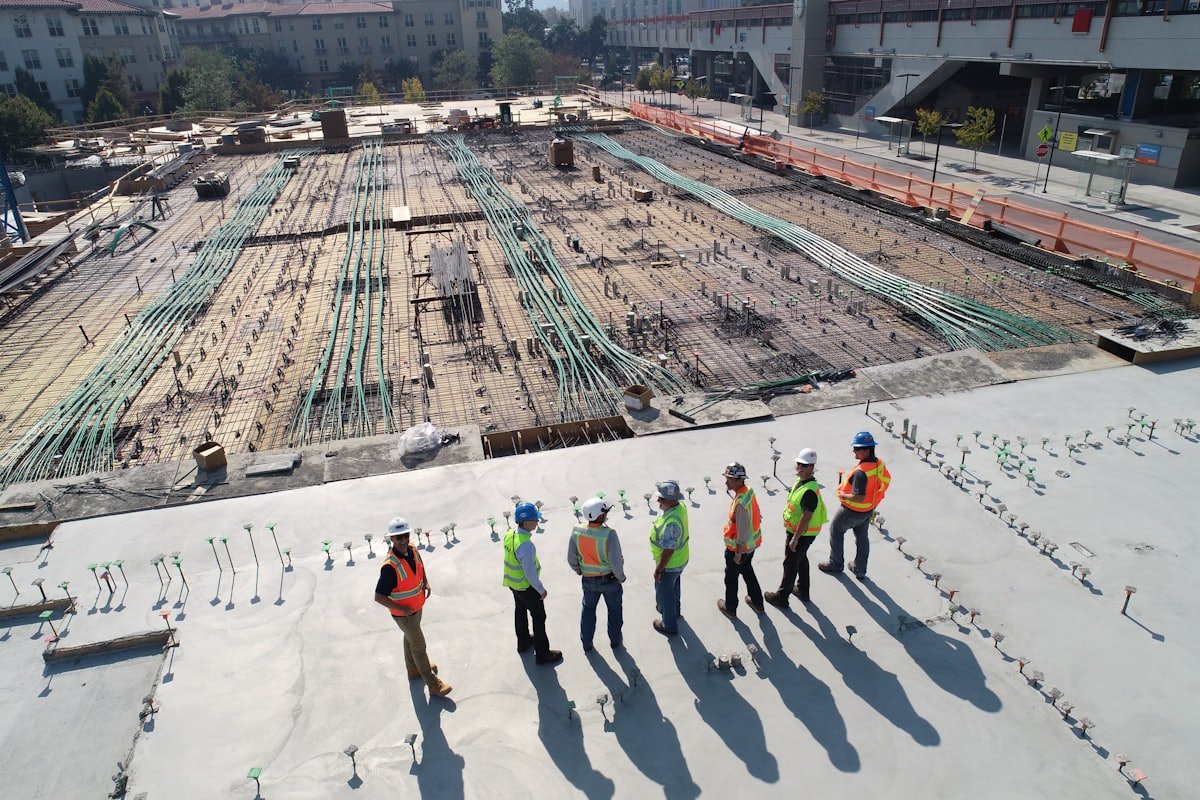
Construction
Projects are won on a date and delivered against one. The technology question in construction is rarely the site itself; it is whether the chain from an approved headcount to somebody actually cleared to work on site can be seen far enough ahead to act on.
The date is fixed and everything else moves.
A contract award sets a mobilisation date that will not be renegotiated, and the requirement behind it changes weekly: scope shifts, a package is subcontracted, a role is split in two. Planning tools assume a stable requirement and a flexible date, which is the opposite of the situation.
The constraint is readiness, not recruitment.
Counting candidates measures the part of the process that is not the problem. Documents, medicals, permits, site inductions and equipment each have a lead time nobody can compress in the final week, and they are invisible in a hiring funnel. A project is late because a permit started late, not because too few people applied.
How we approach it.
Model readiness as a state on the record with each requirement and its lead time, so the weekly question becomes which requirement is now at risk. Connect the approved requirement to recruitment progress so a change in one is visible in the other. Then put the supporting service work, equipment and facilities, on the same site and location structure, so a record can be traced to a place rather than to a project code.
What tends to be true afterwards.
The mobilisation report answers the question that was actually being asked, which is whether the date holds. Escalation happens when a lead time is threatened rather than when a deadline is missed. And the record of what was done on which site survives the project closing, which is the part that matters when a claim arrives two years later.
Start with the requirements of the work.
Demand changes as the project moves.
Link approved workforce requirements to recruitment progress and mobilisation readiness.
Joining needs a complete handover.
Track documents, approvals and outstanding actions before people are expected on site.
Supporting services need traceable records.
Connect equipment and facilities work to locations, responsible teams and evidence of completion.
Products to explore
Explore the fit, then agree the configuration and implementation scope.
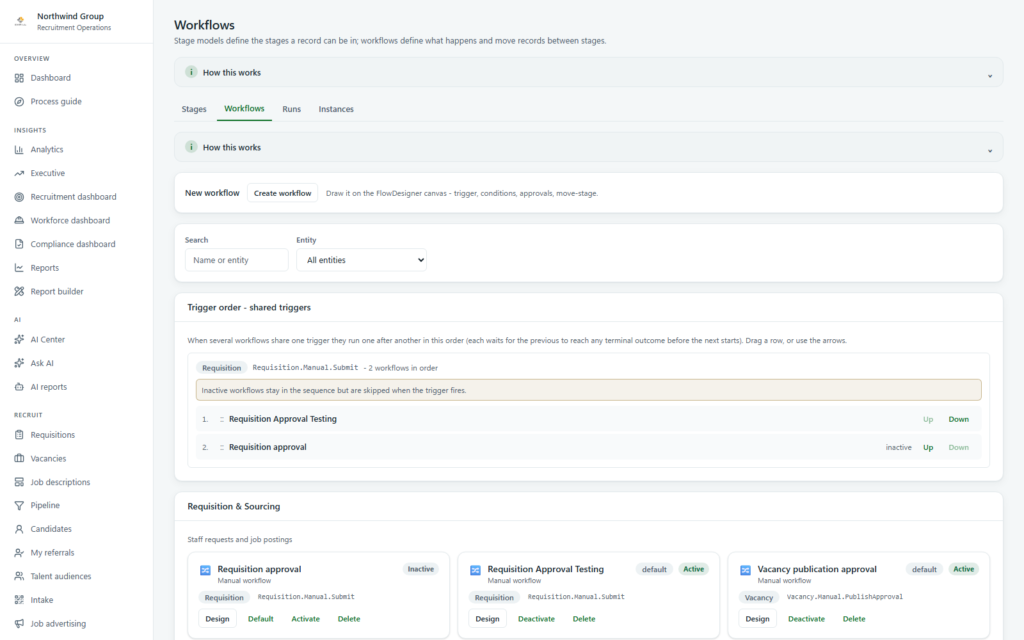
Rovix runs the whole chain from a staff request to somebody starting work: requisitions and approvals, vacancies and pipelines, agencies, offers, onboarding and internal mobility. Four audiences use it, the workflows behind it are drawn rather than coded, and its AI is advisory by architecture.
Explore →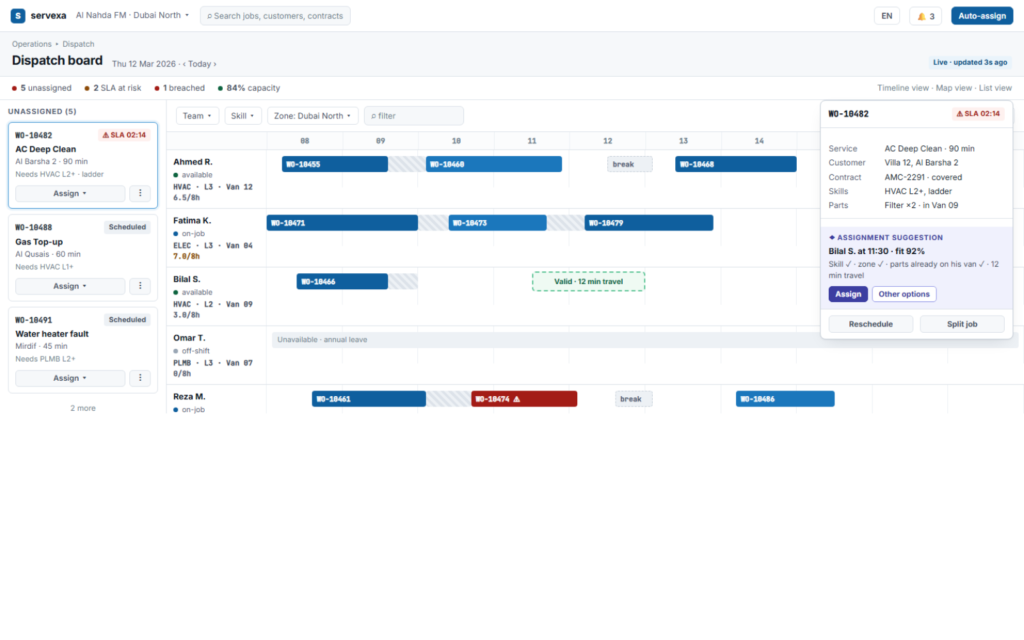
Servexa runs the full life of a service job: what was promised, what was scheduled, who did it, what it consumed, what it cost and what it was worth. A booking front end for customers, a dispatch board for operations, an offline app for the field, and a configuration studio where the service catalogue is versioned rather than deployed.
Explore →Related technology work
Mobile device management
Enrolling, configuring, securing and eventually retiring the devices people work on, without turning every change into a helpdesk queue.
Explore →ERP and business systems
The finance, supply and operations backbone: what it has to record, who decides what, and how the work reaches it. The decisions come before the configuration.
Explore →Enterprise integration
Making separate systems behave like one: the interfaces, the mappings, and what happens on the day one of them is unavailable.
Explore →Data and analytics
Turning records into decisions: agreeing what a number means, where it comes from, and which question it is meant to answer.
Explore →Operational technology
The systems that run plant, sites and equipment: getting data out of them, and keeping them separated from everything else.
Explore →What would a better working day look like?
Bring us the process you want to improve. We’ll explore the product, technology and delivery work it needs.