




The platforms. A clearer working day.
Purpose-built platforms for workplace coordination, recruitment and service operations.


Where organisations ask us to start
A solution may combine a platform from the catalogue, a partner platform, custom software, and our consulting and delivery teams.
The people you need, for as long as you need them
Take one practice or all five, for a defined project or for as long as the work lasts.
All services →Technology consulting
Assess your current systems, compare practical options and define a roadmap tied to business priorities.
02ERP implementation
Configure, connect and launch your ERP around agreed processes, reconciled data and the people who will use it.
03System integration
Connect applications through agreed interfaces, data mappings and recovery paths that operations teams can understand.
04Application development
Design and develop business applications around a defined user need, with integration, maintainability and ownership considered from the start.
05Managed technology teams
Establish a continuing delivery team with an agreed operating rhythm, capacity and responsibility for progress.
06Application support
Organise support, maintenance and controlled improvements around the systems your teams depend on.
07Enterprise application implementation
Turn a selected business application into a configured, connected system with clear ownership and a planned rollout.
08Data migration
Plan extraction, cleansing, mapping and reconciliation so your new system starts with records the business can trust.
Operations we already understand
Every sector runs its own version of the same problems. These are the ones we have worked in, and what usually needs attention first.
Construction
Projects are won on a date and delivered against one. The technology question in construction is rarely the site itself; it is whether the chain from an approved headcount to somebody actually cleared to work on site can be seen far enough ahead to act on.
Explore →Enterprise Services
Shared services work when a request has one owner and one route. What makes them difficult is that requests cross functions, each function has its own system, and the handover between them is where the information is lost.
Explore →Facilities Management
Facilities work is judged on whether the record survives the handovers: what the contract promised, what was scheduled, who attended, what it consumed, and what it cost. Every step usually works. The month end is where it comes apart.
Explore →Field Services
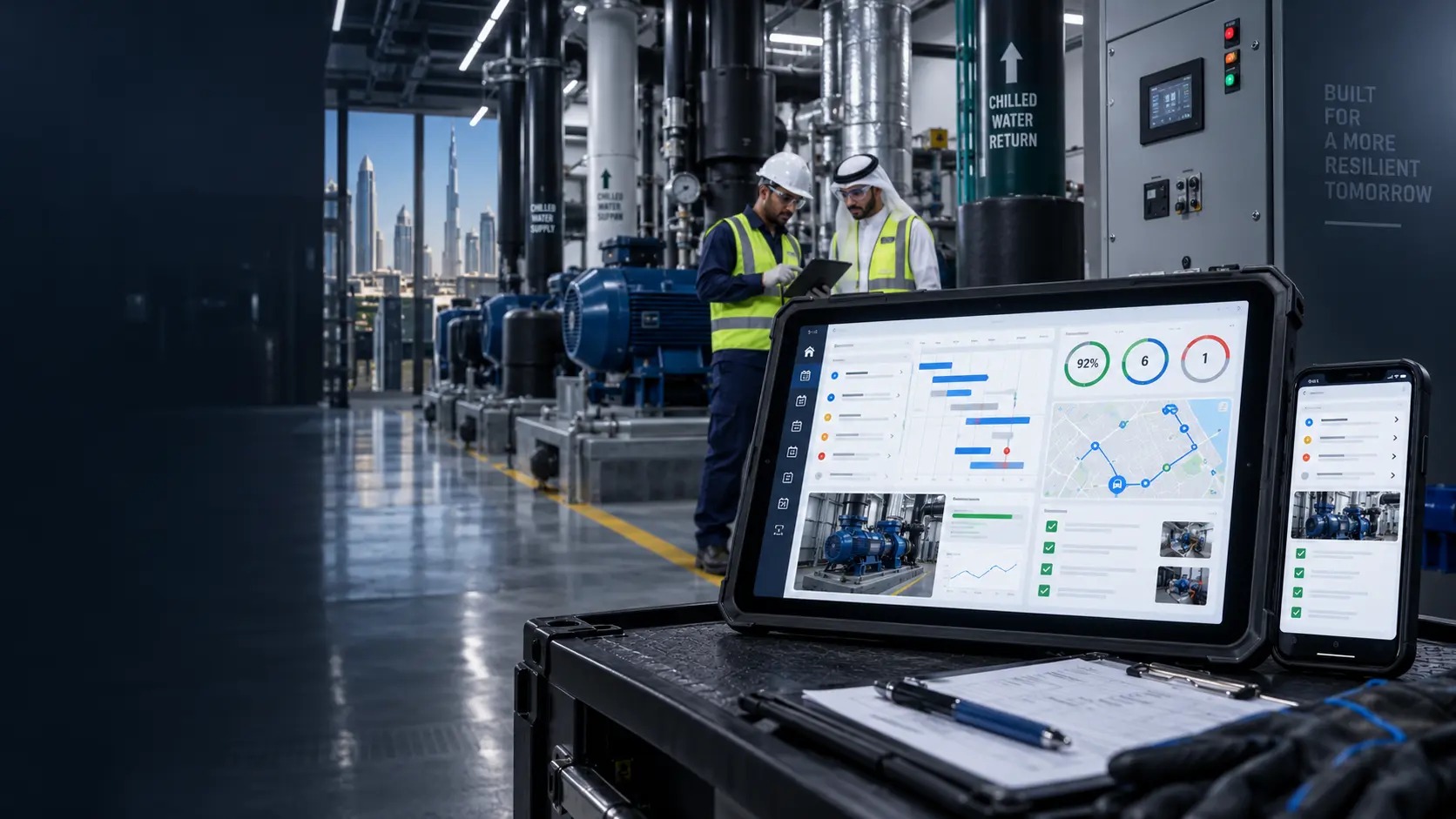
A field business lives on what happens away from the office, where the person doing the work cannot ask anybody a question. Whether the promise made at booking reaches the technician, and whether what the technician did reaches the invoice, decides both the customer relationship and the margin.
Explore →Government
In a public entity the decision trail matters as much as the decision. What has to be demonstrable is who was authorised, on what basis they decided, and where the data sat while they did. Systems that cannot show that are difficult to defend regardless of how well they work.
Explore →Healthcare
Our scope here is the administrative side: the workplace, the workforce and the facilities around care delivery. Clinical systems are a separate specialist discipline and we say so rather than implying coverage. The boundary between the two is itself part of the work.
Explore →Professional Services
The asset is people and their time, and both move between clients, projects and offices constantly. The technology question is whether the organisation can see where its capacity actually is this week, and whether the office it pays for matches the way its teams now work.
Explore →Real Estate
A portfolio is only legible if every record can be traced to a place. Customers, properties, locations and assets have to be structured before service history means anything, and most estates have grown faster than the structure holding them.
Explore →See where the software fits.
Illustrative scenarios showing how the products and the delivery work fit together. These are not customer case studies.
All use cases →Connecting a service job from booking to billing
A service operator needs a consistent record of the customer promise, the field visit and the invoice. This scenario explores where Servexa can fit.
Preparing a recruitment campaign for mobilisation
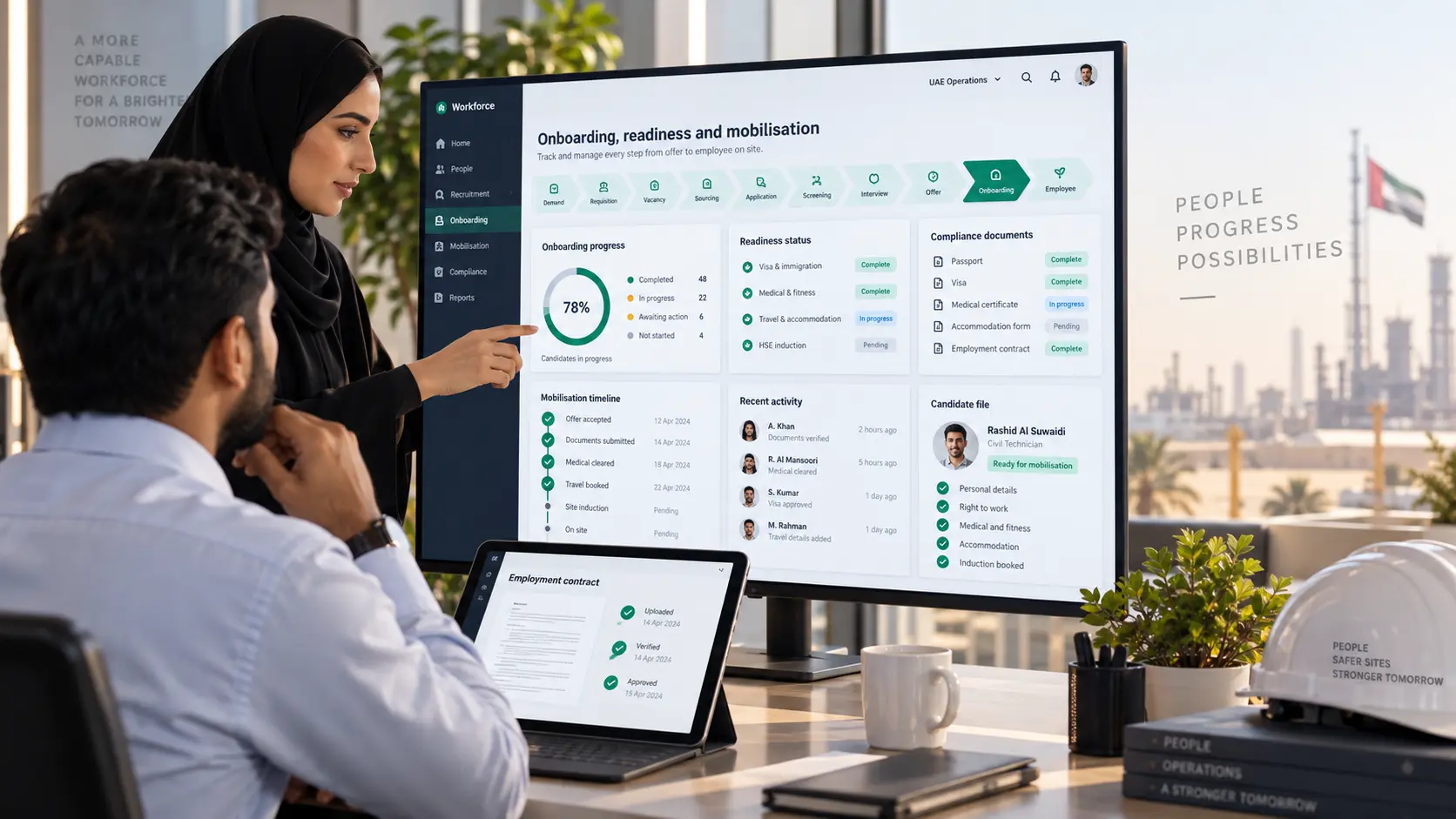
A project needs several roles to be filled and ready to start together. This scenario follows the approvals, candidate decisions and joining requirements through Rovix.
Understanding the gap between bookings and attendance
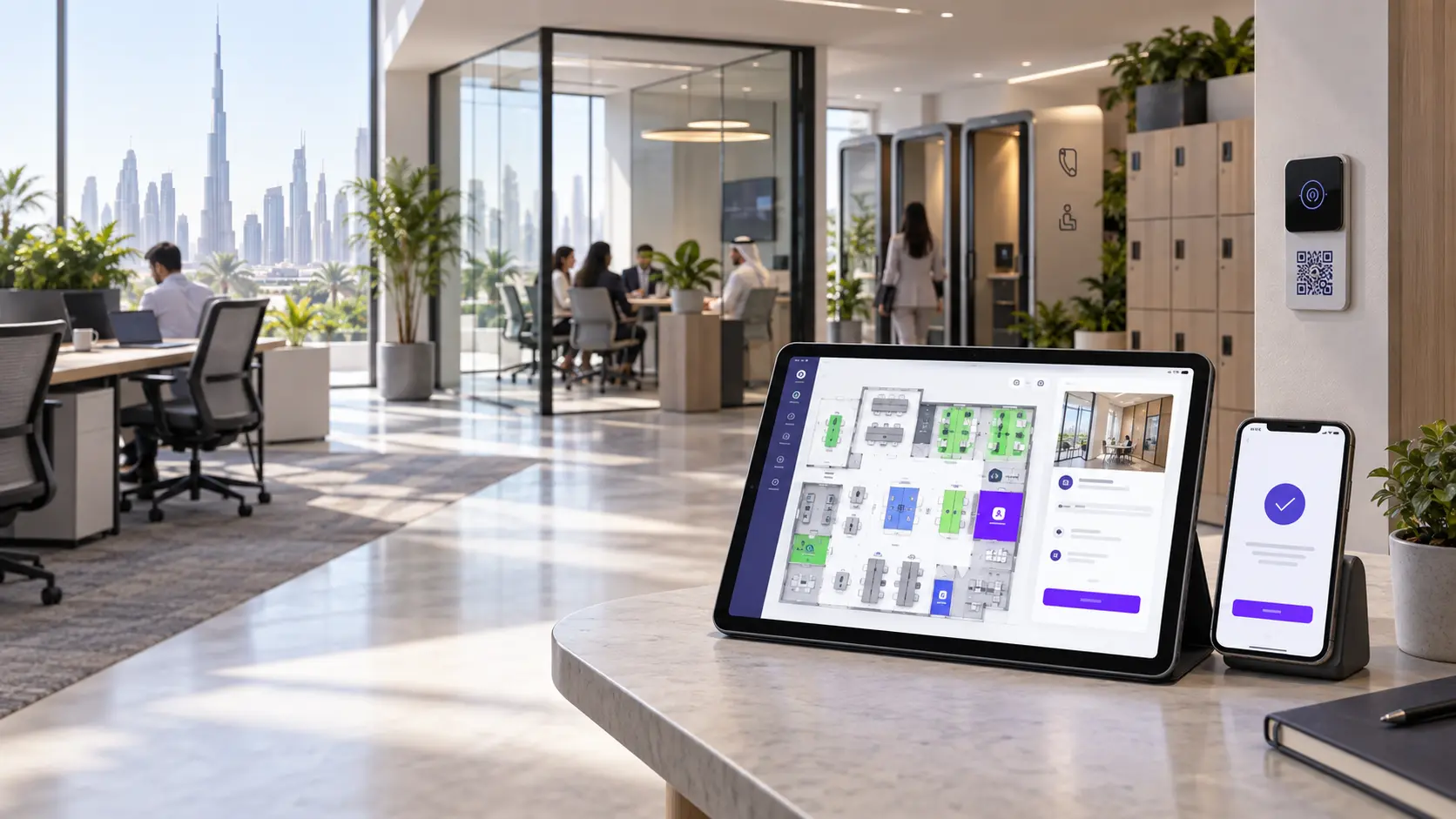
An office appears fully booked while some desks remain unused. This scenario explores a DesQ approach to booking, check-in and workplace review.
What we are seeing
What we are seeing in the operations we work in, written when there is something worth saying.
All insights →What configuration should mean for a service business
A service business changes its prices, its checklists and its service definitions constantly. If each change is a release, the business runs at the speed of the release…
A good low-code application still needs an operating plan
Building the application quickly is the solved part. What decides whether it is still useful in two years is everything around it.
The business decisions hidden inside an ERP project
The software is the last decision. What determines the cost and the timeline is a set of business questions that nobody owns until somebody insists.
Have a technology challenge to solve?
Whether you need strategic guidance, implementation support, specialist expertise or a complete solution, we can help you define the right approach and deliver it.