

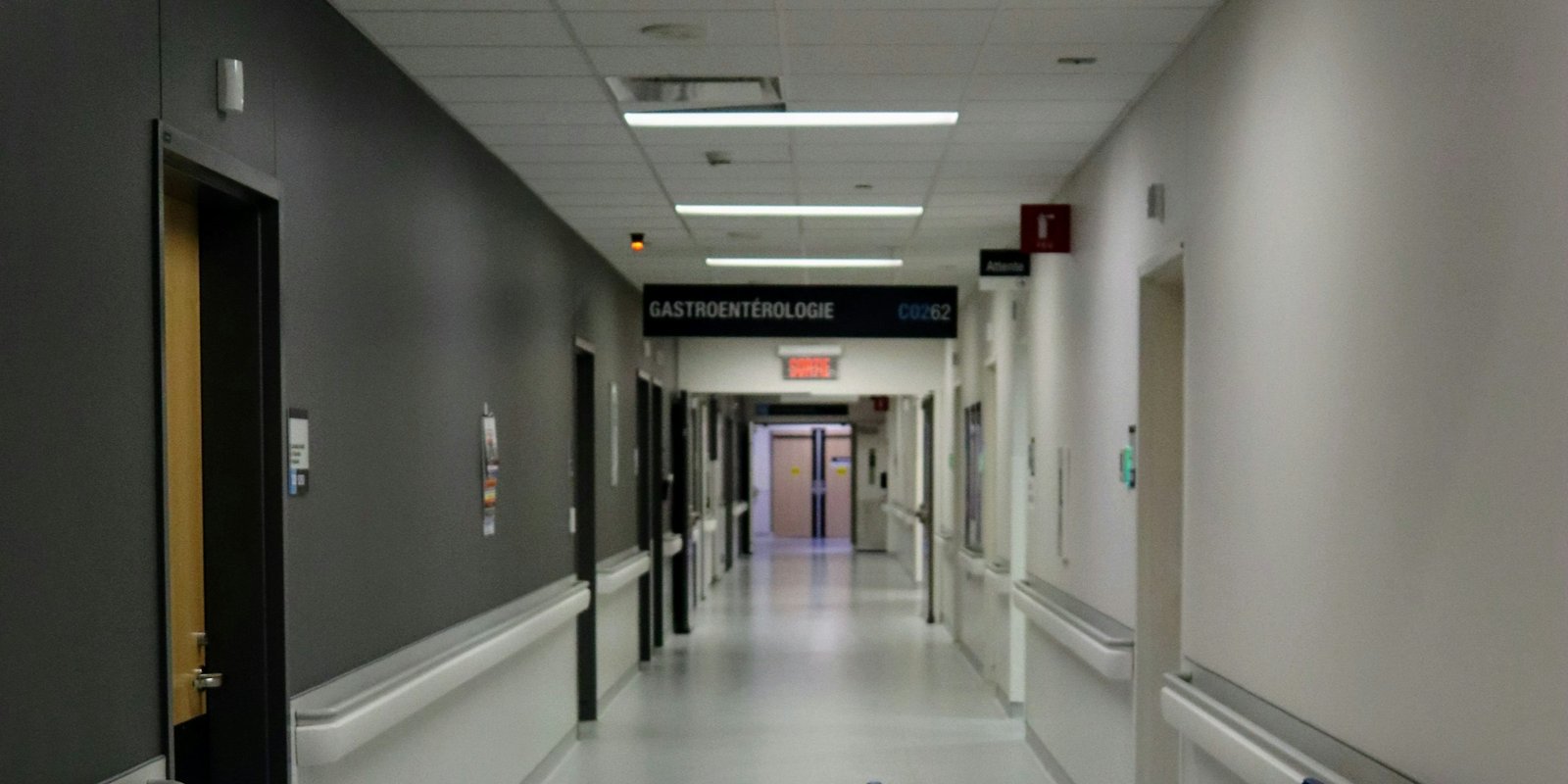
Healthcare
Our scope here is the administrative side: the workplace, the workforce and the facilities around care delivery. Clinical systems are a separate specialist discipline and we say so rather than implying coverage. The boundary between the two is itself part of the work.
The boundary has to be drawn explicitly.
Administrative, workforce and facilities information sits close to clinical information and must not merge with it. Which system holds what, which interfaces exist, and what each role may see are decisions to make in writing at the start, because discovering the boundary during an audit is a different and much worse conversation.
Facilities work has to be planned around care, not around the schedule.
A maintenance window in a working clinical environment is negotiated with the people delivering care, not published to them. Access, noise, isolation and infection control shape when work can happen, and a scheduling system that treats a site as an address will produce plans that are cancelled on arrival.
How we approach it.
Coordinate maintenance activity with site owners, access arrangements and service priority, so a plan reflects what the building will actually permit. Track role-specific joining requirements through the recruitment process as first-class states, since readiness in this sector carries registration and clearance requirements that cannot be shortened. And define the permissions and interfaces at the clinical boundary before anything is connected.
What tends to be true afterwards.
Facilities work happens when it was planned, because the plan was agreed with the people affected. Joining requirements are visible far enough ahead to act on. And the boundary with clinical systems is documented well enough that an assessor can be shown it rather than told about it.
Start with the requirements of the work.
Facilities work needs planned access.
Coordinate maintenance activity with site owners, access arrangements and service priorities.
Readiness extends beyond an accepted offer.
Track role-specific documentation and joining requirements through the agreed recruitment process.
Information access needs a clear boundary.
Separate administrative, workforce and facilities information from clinical systems and define the required permissions and interfaces.
Products to explore
Explore the fit, then agree the configuration and implementation scope.
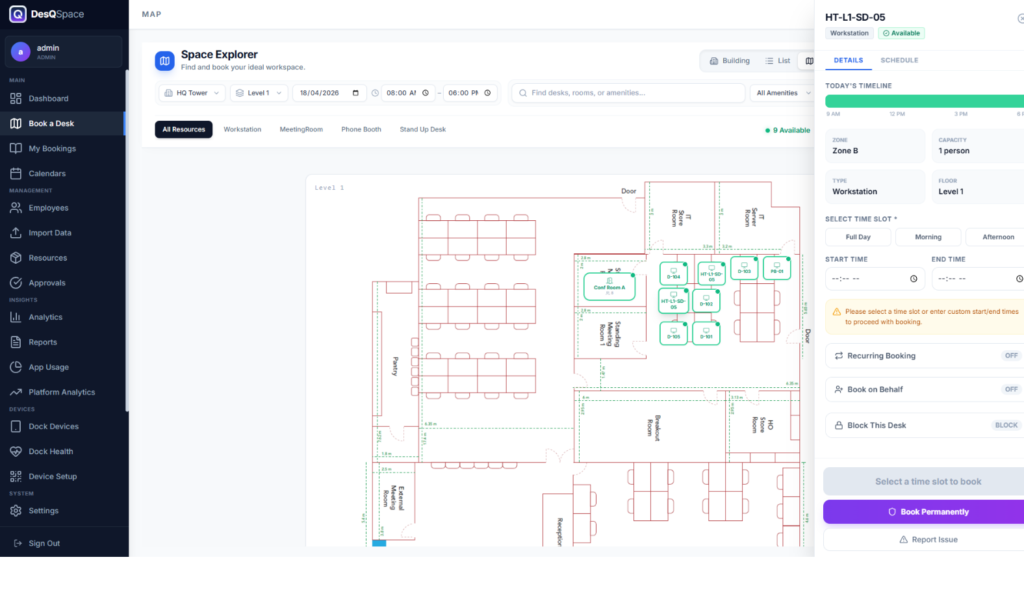
Three connected products, not one. DesQ Space is the control centre on the web, DesQ Go is the employee app on iOS and Android, and DesQ Dock is the screen at the door. Together they turn desks, rooms, lockers and phone booths into bookable resources on a real floor plan, confirm who actually turned up, and show where the space is going.
Explore →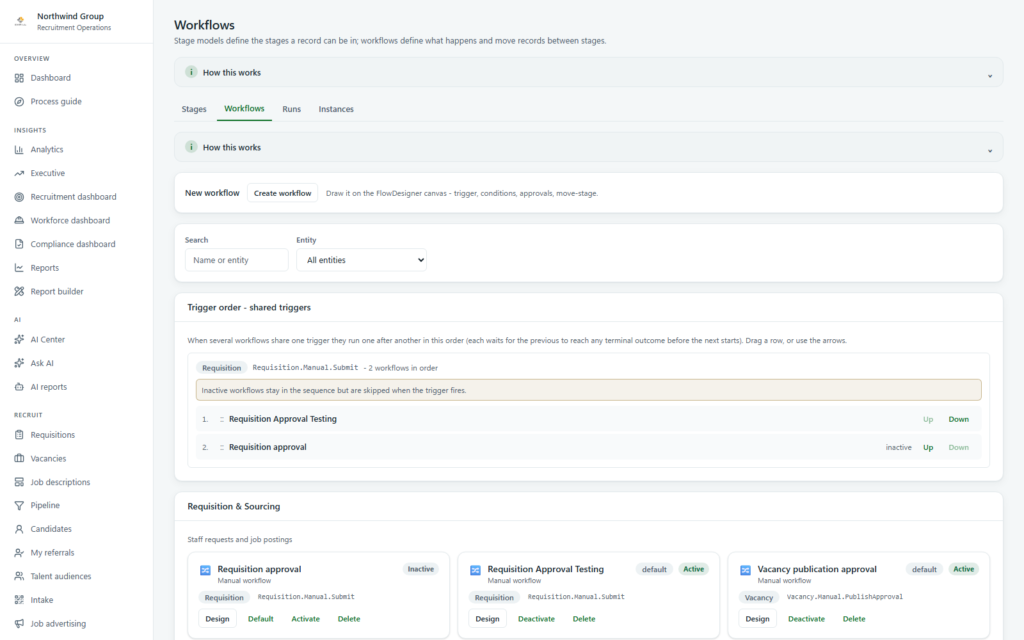
Rovix runs the whole chain from a staff request to somebody starting work: requisitions and approvals, vacancies and pipelines, agencies, offers, onboarding and internal mobility. Four audiences use it, the workflows behind it are drawn rather than coded, and its AI is advisory by architecture.
Explore →Related technology work
AI governance
Knowing where AI is already being used, what it touches, who owns each use, and what has to be true before it goes near a decision.
Explore →Mobile device management
Enrolling, configuring, securing and eventually retiring the devices people work on, without turning every change into a helpdesk queue.
Explore →Enterprise integration
Making separate systems behave like one: the interfaces, the mappings, and what happens on the day one of them is unavailable.
Explore →Workplace technology
Making the estate legible: what space exists, who is really using it, and whether the building matches how people now work.
Explore →Security technology
Identity, access, monitoring and response as an operating discipline. Security is not a product you finish installing.
Explore →What would a better working day look like?
Bring us the process you want to improve. We’ll explore the product, technology and delivery work it needs.