


Real Estate
A portfolio is only legible if every record can be traced to a place. Customers, properties, locations and assets have to be structured before service history means anything, and most estates have grown faster than the structure holding them.
Structure first, or the history is unusable.
When the same building appears under three spellings and an asset is recorded against a tenant rather than a location, the service history cannot answer how much that property costs to run. That question is the whole point of holding the records, and the answer is unavailable for structural reasons rather than for lack of data.
Entitlement decides the job before it is scheduled.
Whether work is covered, chargeable to the landlord, chargeable to the tenant or out of scope changes who is told, what is billed and how fast it has to happen. Establishing that after the visit is what turns a routine job into a disputed invoice, and it happens in this sector more than in any other.
How we approach it.
Establish the hierarchy properly first: customer, property, location, asset, with one authoritative name per record. Attach entitlement, planned maintenance and chargeability to that structure so the commercial position is known at dispatch. Then make evidence travel with the work, so field records, quality checks and the commercial follow-up all land on the same service history rather than in three systems.
What tends to be true afterwards.
A cost per property that can be defended. Recurring work that is visibly planned rather than remembered. And a service history that answers a tenant question from the record instead of from whoever attended.
Start with the requirements of the work.
A portfolio needs a consistent structure.
Keep customers, properties, locations and assets organised so service records can be traced to the right place.
Contract coverage shapes the job.
Make entitlements, planned maintenance and chargeable work part of the operating process.
Evidence needs to travel with the work.
Connect field records, quality checks and commercial follow-up to the same service history.
Products to explore
Explore the fit, then agree the configuration and implementation scope.
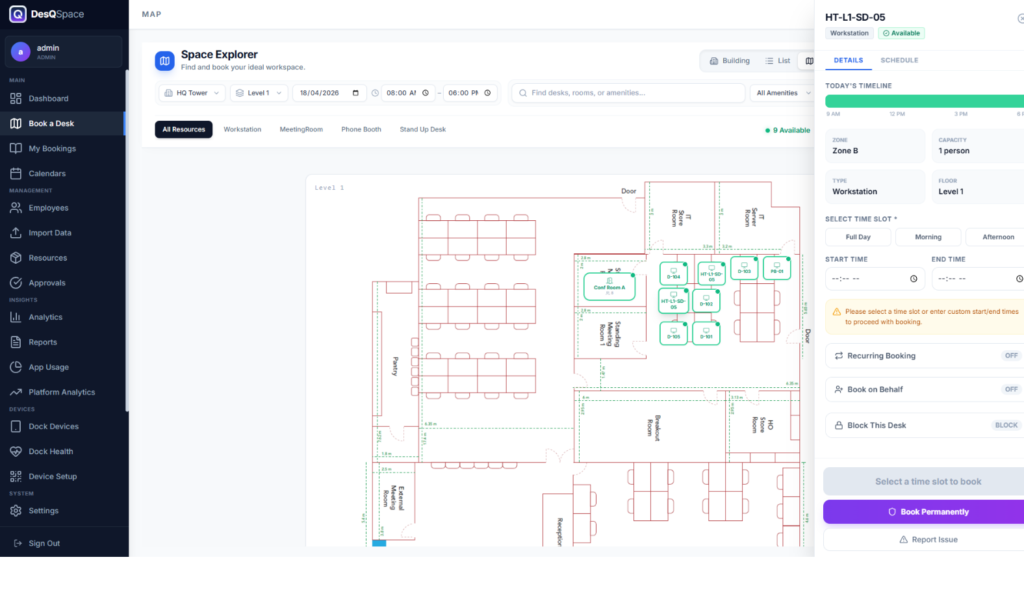
Three connected products, not one. DesQ Space is the control centre on the web, DesQ Go is the employee app on iOS and Android, and DesQ Dock is the screen at the door. Together they turn desks, rooms, lockers and phone booths into bookable resources on a real floor plan, confirm who actually turned up, and show where the space is going.
Explore →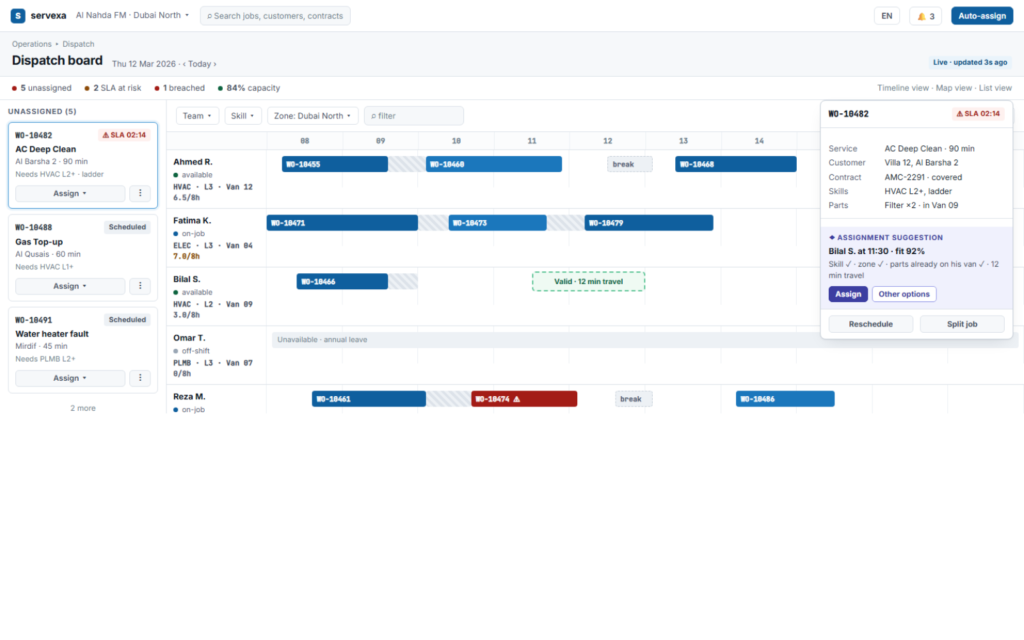
Servexa runs the full life of a service job: what was promised, what was scheduled, who did it, what it consumed, what it cost and what it was worth. A booking front end for customers, a dispatch board for operations, an offline app for the field, and a configuration studio where the service catalogue is versioned rather than deployed.
Explore →Related technology work
ERP and business systems
The finance, supply and operations backbone: what it has to record, who decides what, and how the work reaches it. The decisions come before the configuration.
Explore →Enterprise integration
Making separate systems behave like one: the interfaces, the mappings, and what happens on the day one of them is unavailable.
Explore →Data and analytics
Turning records into decisions: agreeing what a number means, where it comes from, and which question it is meant to answer.
Explore →Workplace technology
Making the estate legible: what space exists, who is really using it, and whether the building matches how people now work.
Explore →What would a better working day look like?
Bring us the process you want to improve. We’ll explore the product, technology and delivery work it needs.