


Enterprise Services
Shared services work when a request has one owner and one route. What makes them difficult is that requests cross functions, each function has its own system, and the handover between them is where the information is lost.
The process is real and the ownership is not.
A joiner needs a contract, a desk, a device, an account and an induction, from five teams who each consider their part complete when they have done it. Nobody owns the whole, so nobody can say where the request is. The individual systems are usually fine; the space between them is not modelled anywhere.
Growth adds definitions faster than it adds systems.
A new entity, a new country or an acquisition brings a second answer to what headcount means, when a cost belongs to a period, and which record is current. Reporting then becomes a reconciliation exercise, and the meetings that should be about decisions are spent agreeing whose number is right.
How we approach it.
Map the request end to end and name a single owner for it, then define the handovers, the approval rights and who owns each piece of information. Write one definition per shared measure with a person accountable for it. Where several systems must agree about the same record, decide which side owns it before building the interface rather than after the first disagreement.
What tends to be true afterwards.
A request has a status somebody can read without ringing three teams. A shared measure means the same thing in every report. And adding the next entity is a configuration exercise rather than a fresh negotiation about definitions.
Start with the requirements of the work.
Requests cross functional boundaries.
Define handovers, approval rights and information ownership across departments.
Shared resources need shared visibility.
Coordinate workplace availability and access without losing the policies of each location.
Growth adds systems and complexity.
Review integrations, master data and reporting definitions as entities, teams and applications change.
Products to explore
Explore the fit, then agree the configuration and implementation scope.
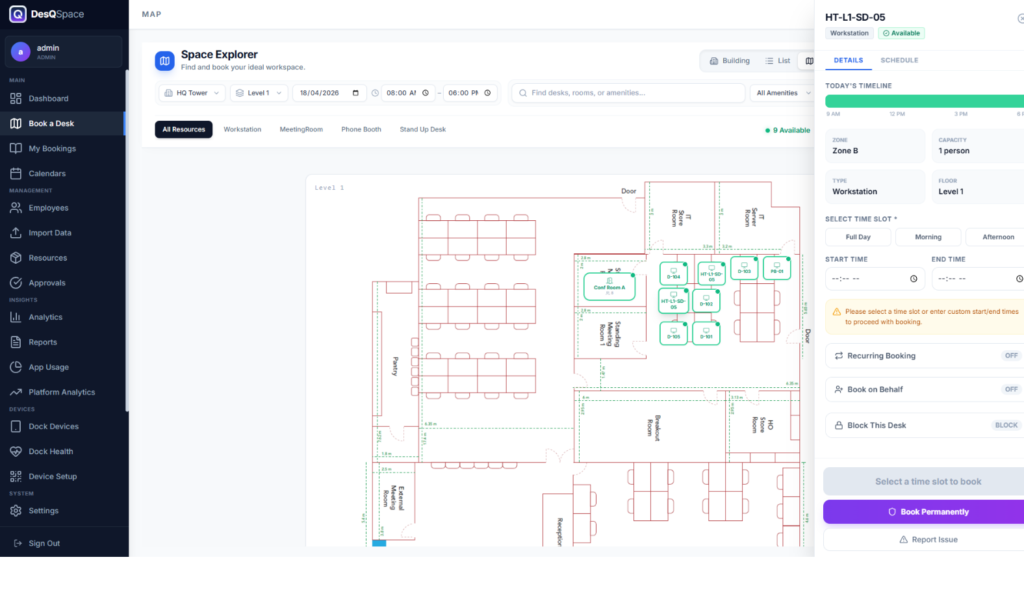
Three connected products, not one. DesQ Space is the control centre on the web, DesQ Go is the employee app on iOS and Android, and DesQ Dock is the screen at the door. Together they turn desks, rooms, lockers and phone booths into bookable resources on a real floor plan, confirm who actually turned up, and show where the space is going.
Explore →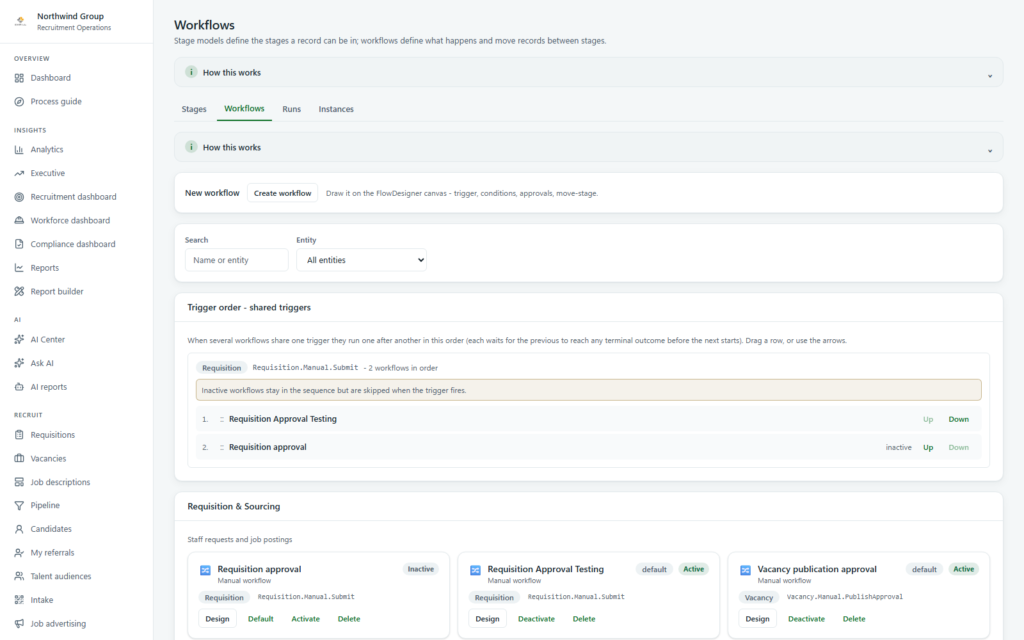
Rovix runs the whole chain from a staff request to somebody starting work: requisitions and approvals, vacancies and pipelines, agencies, offers, onboarding and internal mobility. Four audiences use it, the workflows behind it are drawn rather than coded, and its AI is advisory by architecture.
Explore →Related technology work
Business process automation
Taking the manual handling out of a process without hard-coding today's exceptions into next year's system.
Explore →ERP and business systems
The finance, supply and operations backbone: what it has to record, who decides what, and how the work reaches it. The decisions come before the configuration.
Explore →Enterprise integration
Making separate systems behave like one: the interfaces, the mappings, and what happens on the day one of them is unavailable.
Explore →Data and analytics
Turning records into decisions: agreeing what a number means, where it comes from, and which question it is meant to answer.
Explore →Low-code application delivery
Assembling applications quickly, with the ownership, standards and lifecycle that keep them from becoming a liability.
Explore →Workplace technology
Making the estate legible: what space exists, who is really using it, and whether the building matches how people now work.
Explore →What would a better working day look like?
Bring us the process you want to improve. We’ll explore the product, technology and delivery work it needs.