


Facilities Management
Facilities work is judged on whether the record survives the handovers: what the contract promised, what was scheduled, who attended, what it consumed, and what it cost. Every step usually works. The month end is where it comes apart.
Coverage is a commercial question asked at the wrong moment.
Whether a job is covered by the contract, chargeable, or out of scope decides the money, and it is usually established after the work is done by somebody reading the agreement. That is the single largest source of disputed invoices in the sector, and it is a data problem rather than a commercial one.
Capacity is not headcount.
A schedule built on how many technicians are available ignores skill, zone, access window, parts on the van and whether the site will let anybody in that morning. Assignments made without those checks are reassigned in the field, and the plan stops describing the day by about ten in the morning.
How we approach it.
Put contract coverage, entitlements and priority on the site and asset structure, so the commercial position is known before dispatch rather than at invoicing. Validate skill, zone, parts and access at the point of assignment. Capture time, materials, checks and evidence at the point of work on a device that functions without a signal. Then let the invoice derive from the job rather than from a re-entry.
What tends to be true afterwards.
One record per job holding the promise, the work, the evidence and the money. Disputes answered from the record rather than from whoever can find a photograph. And, usually for the first time, a view of which contracts and which services actually make money, which tends to change at least one commercial decision.
Start with the requirements of the work.
Each site has its own obligations.
Connect contract coverage, service priorities and access conditions to the place where work happens.
Capacity depends on more than headcount.
Consider skills, teams, availability, equipment and materials when planning the work.
Closeout needs evidence and cost.
Record the job’s time, material use, checks and commercial status alongside completion.
Products to explore
Explore the fit, then agree the configuration and implementation scope.
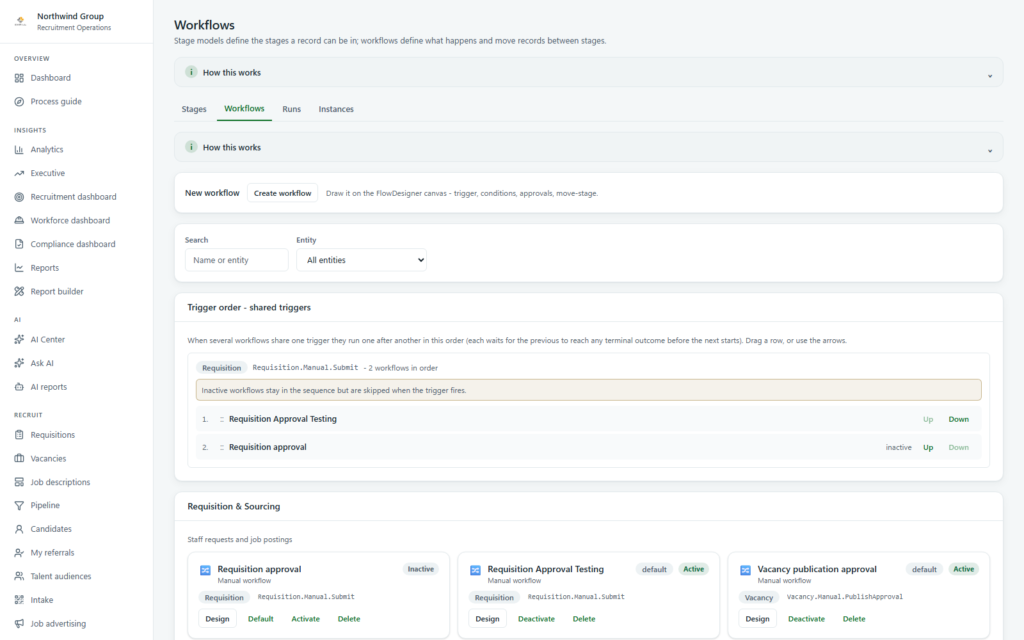
Rovix runs the whole chain from a staff request to somebody starting work: requisitions and approvals, vacancies and pipelines, agencies, offers, onboarding and internal mobility. Four audiences use it, the workflows behind it are drawn rather than coded, and its AI is advisory by architecture.
Explore →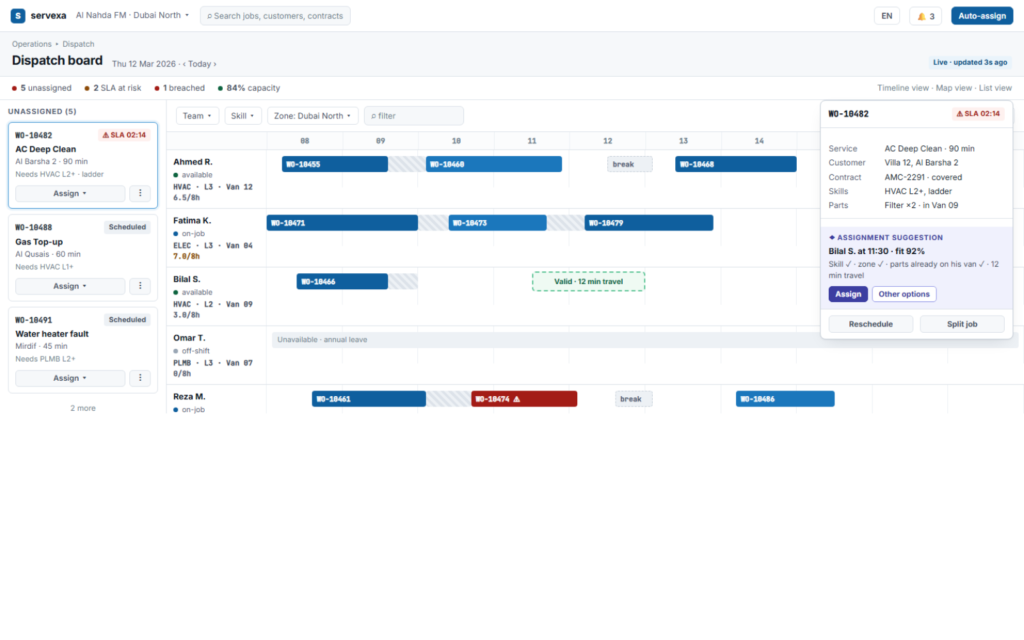
Servexa runs the full life of a service job: what was promised, what was scheduled, who did it, what it consumed, what it cost and what it was worth. A booking front end for customers, a dispatch board for operations, an offline app for the field, and a configuration studio where the service catalogue is versioned rather than deployed.
Explore →Related technology work
Mobile device management
Enrolling, configuring, securing and eventually retiring the devices people work on, without turning every change into a helpdesk queue.
Explore →Enterprise integration
Making separate systems behave like one: the interfaces, the mappings, and what happens on the day one of them is unavailable.
Explore →Data and analytics
Turning records into decisions: agreeing what a number means, where it comes from, and which question it is meant to answer.
Explore →Workplace technology
Making the estate legible: what space exists, who is really using it, and whether the building matches how people now work.
Explore →Operational technology
The systems that run plant, sites and equipment: getting data out of them, and keeping them separated from everything else.
Explore →What would a better working day look like?
Bring us the process you want to improve. We’ll explore the product, technology and delivery work it needs.