


Understanding the gap between bookings and attendance
An office appears fully booked while some desks remain unused. This scenario explores a DesQ approach to booking, check-in and workplace review.
An illustrative scenario. It describes a situation we see often and how the work would be approached, not a project delivered for a named customer.
The situation.
An organisation has introduced desk booking across two buildings. The reports say the main floor runs near capacity on Tuesdays, Wednesdays and Thursdays, and a paper is being prepared to retain a floor whose lease is up for renewal. Meanwhile people are complaining that they cannot find a desk, and the facilities team keeps being sent photographs of empty rows.
What is actually happening.
The two accounts are both true, because they are measuring different things. The report counts reservations. The photographs show attendance. People book early in the week for days they are not sure about, hold recurring slots from a pattern that has changed, and rarely cancel, because cancelling has no benefit to them.
How the work would go.
Introduce a confirmation step that takes a second, scanning a code at the desk or tapping a tag, and release anything unconfirmed after a stated grace period. Announce the change with the reason, because a release that surprises people reads as a fault. Then leave it alone for a few weeks and let the behaviour settle before reading anything into the numbers.
What the organisation ends up with.
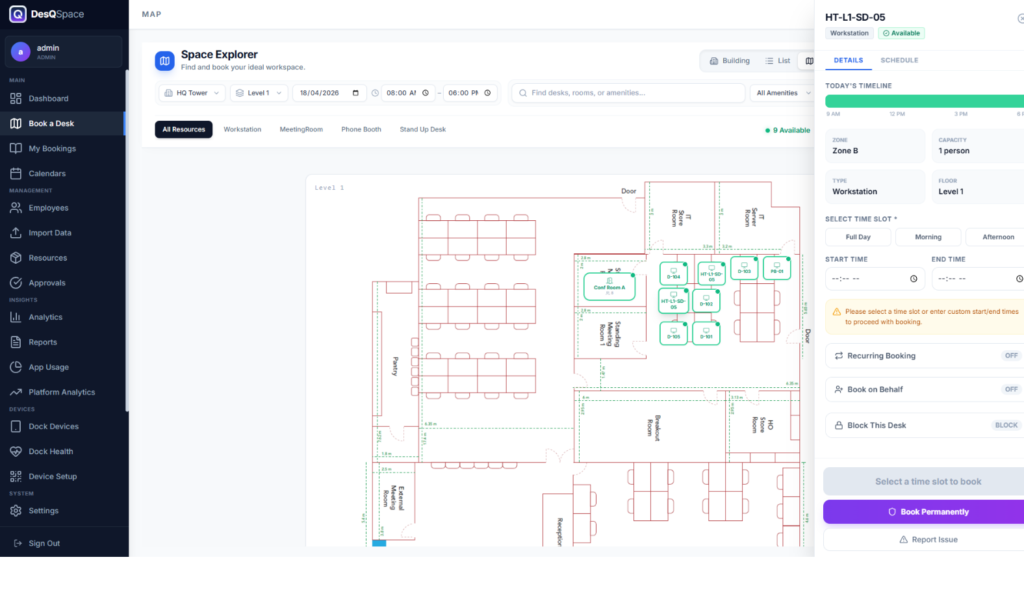
Two figures instead of one: reservations and attendance, with the gap between them visible. A floor plan that matches the building, so somebody looking for a desk finds one. And an occupancy number that a property decision can be made on, which may well support keeping the floor, but will support it for a reason that holds.
What would a better working day look like?
Bring us the process you want to improve. We’ll explore the product, technology and delivery work it needs.